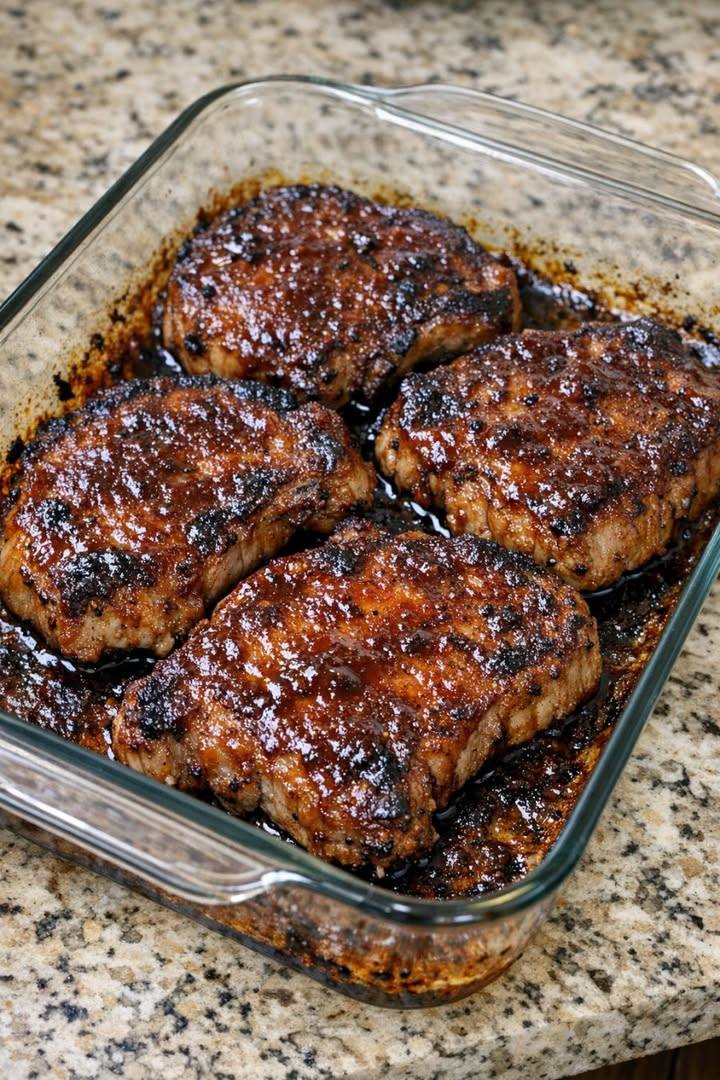
Directions
Preheat the oven to 400°F (200°C). Lightly grease a baking dish large enough to hold the pork chops in a single layer with nonstick spray or a thin film of oil.
Pat the pork chops dry with paper towels. Removing surface moisture helps them brown better and prevents them from steaming in the oven.
In a small bowl, combine the kosher salt, black pepper, smoked paprika, garlic powder, onion powder, brown sugar, and cayenne (if using). This mixture acts as a quick dry rub, seasoning the meat and giving the sauce something flavorful to cling to.
Rub the pork chops on both sides with the olive oil, then sprinkle the spice mixture evenly over both sides, pressing gently so it adheres.
In another small bowl, stir together the barbecue sauce, apple cider vinegar, and Dijon mustard (if using). The vinegar brightens the sweetness of the sauce, while the mustard adds a subtle savory note.
Arrange the seasoned pork chops in the prepared baking dish. Spoon or brush about half of the barbecue sauce mixture over the tops of the chops, coating them evenly but reserving enough sauce for glazing later.
Cover the baking dish tightly with foil. Bake in the preheated oven for 15 minutes. Covering the dish at this stage helps the chops cook gently and stay moist.
After 15 minutes, remove the foil and baste the chops with some of the remaining barbecue sauce. Return the uncovered dish to the oven.
Continue baking for another 10–15 minutes, basting once more with sauce halfway through, until the pork chops reach an internal temperature of 145°F (63°C) when checked with an instant-read thermometer in the thickest part away from the bone.
Once the chops are done, remove the dish from the oven and let the pork rest for 5 minutes. Resting allows the juices to redistribute so the meat stays moist when you cut into it.
Serve the pork chops warm, spooning any pan juices over the top and offering extra barbecue sauce at the table.
Advertisement
Variations & Tips
For boneless chops: Use chops that are about 1-inch thick and start checking for doneness a bit earlier, around the 18–20 minute mark total, as they can dry out more quickly than bone-in. For a smokier, more “barbecue pit” flavor, add 1/2 teaspoon liquid smoke to the barbecue sauce mixture and increase the smoked paprika. If you prefer a spicier profile, bump up the cayenne or stir a teaspoon of your favorite hot sauce into the barbecue sauce. To make this recipe a bit lighter and more tangy, use a vinegar-forward Carolina-style barbecue sauce instead of a thick, sweet Kansas City–style sauce, and reduce or omit the brown sugar in the rub. For a honey-garlic twist, replace the brown sugar with 1 tablespoon honey and add 1 teaspoon granulated garlic to the rub, then finish the chops with a drizzle of warm honey just before serving. If you’d like some caramelized edges, switch the oven to broil for the last 2–3 minutes of cooking and watch closely so the sugars in the sauce don’t burn. Finally, for make-ahead convenience, you can season the chops with the dry rub up to 24 hours in advance and refrigerate them; this short “dry brine” time helps the seasoning penetrate and improves overall flavor and juiciness.
