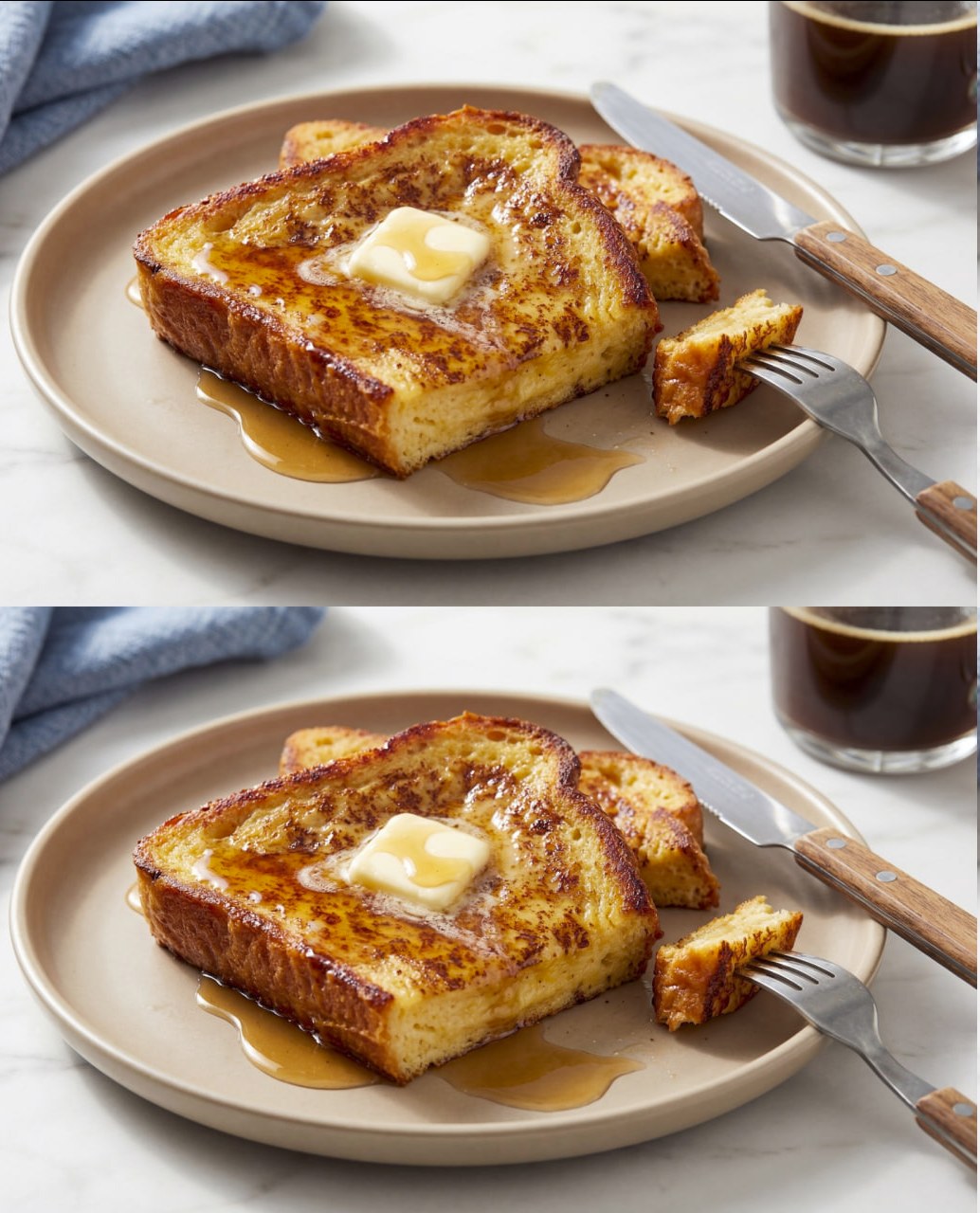
 Step 2: Craft the Custard (The Flavor & Texture Engine)
The Gold-Standard Ratio (for 8–10 slices / 1 loaf):
5 large eggs, room temperature
1 cup (240 ml) half-and-half (not milk—fat = richness)
2 Tbsp (25 g) packed light brown sugar (dark for molasses depth)
1 tsp pure vanilla extract
½ tsp ground cinnamon
¼ tsp freshly grated nutmeg
¼ tsp fine sea salt
Critical prep tips:
→ Crack eggs on a flat surface (not the bowl rim)—prevents shell shards.
→ Whisk vigorously 60 seconds—until no white streaks remain (aeration = lift).
→ Strain the batter through a fine-mesh sieve (removes any egg solids—game-changer for smoothness).
→ Pour into a 9×13-inch baking dish (shallow depth = even soaking).
 Step 3: Soak with Precision (The 30-Second Rule)
Goal: Saturated but intact—not waterlogged.
→ Submerge 2 slices at a time (overcrowding = uneven soak).
→ Press gently to submerge; soak 30 seconds per side (max 60 sec total).
→ Lift with a thin spatula—slices should feel heavy but hold shape (no dripping).
→ Transfer to a wire rack (not a plate—prevents steaming/sogginess).
 Test: Poke center—it should spring back slightly, not squish.
 Step 4: Cook to Golden Perfection (The Maillard Magic)
Equipment: 12-inch nonstick or cast-iron skillet (even heat).
Fat: 1 Tbsp unsalted butter per 2 slices (butter for flavor, but add 1 tsp oil to prevent burning).
The method:
Heat skillet over medium-low (325°F / 165°C surface temp).
Add butter + oil; swirl to coat.
Place 2 soaked slices in skillet. Cook 4–5 minutes—until deeply golden brown, edges crisp, and center feels set (no jiggle).
Flip; cook 3–4 minutes more—until second side matches.
Transfer to a wire rack on a baking sheet (keeps bottom crisp; no steam trap).
Repeat, wiping skillet and adding fresh butter/oil each batch
