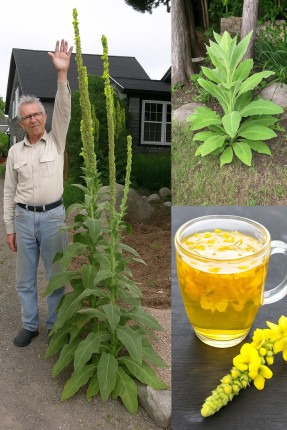
Mullein (Verbascum thapsus) is more than just a tall plant with fuzzy leaves and sunny yellow blooms—it’s a natural powerhouse that’s been trusted for centuries. Whether you’re sipping tea for a cough or massaging sore muscles with infused oil, every part of mullein offers something unique for your health. Let’s break down what the leaves, flowers, and roots can do—and how to use them the right way.
🍃 1. Mullein Leaves: Your Lungs Will Thank You
If you’ve ever made a cup of mullein tea during flu season, you already know how soothing it can be. The leaves are famous for their gentle, lung-loving effects.
Benefits:
Respiratory Support – Eases coughs, asthma, bronchitis, and general chest congestion.
Decongestant – Works as an expectorant to help clear out mucus.
Anti-inflammatory – Calms irritation in both the respiratory and digestive tracts.
Sore Throat Relief – Soothes dry, itchy throats naturally.
Skin Healing – Speeds up recovery from cuts, burns, and rashes.
Pain Relief – Leaf poultices can reduce muscle and joint pain.
Diuretic – Gently supports kidney function and water balance.
Antibacterial – When used topically, helps protect wounds from infection.
How to Use:
Mullein Leaf Tea (for Lungs & Inflammation)
Steep 1–2 tsp of dried leaves in boiling water for 10–15 minutes.
Strain well to remove fine hairs.
Drink 1–2 times daily to clear airways and reduce inflammation.
Leaf Poultice (for Skin & Pain)
Mash fresh leaves into a paste.
Apply to affected area with a clean cloth.
Leave on for 20–30 minutes. Rinse with lukewarm water.
🌼 2. Mullein Flowers: Gentle, Healing, and Relaxing
Delicate but potent, mullein flowers are full of healing compounds. They’re especially loved for making earache oil and calming the nervous system.
