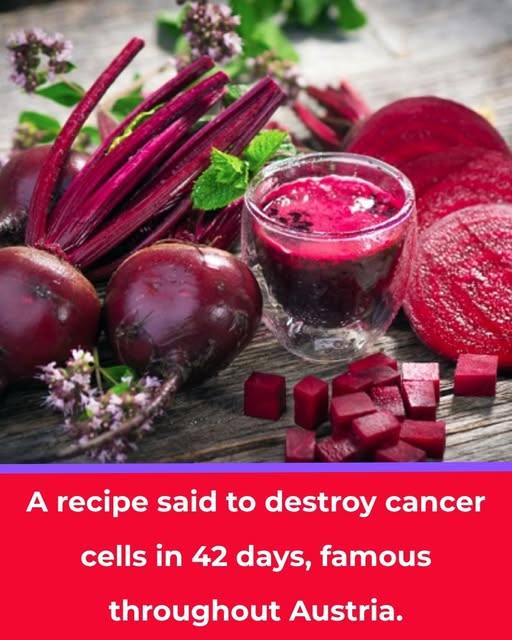
The Breuss Juice Diet revolves around a specific blend of five organic vegetable juices. The exact, proprietary recipe is maintained by some commercial manufacturers, but the core components and generally accepted proportions are as follows:
| Component | Approximate Ratio (by weight) | Key Nutrient Focus |
| Beetroot juice | $\approx 55\%$ | Betalains, Vitamins, Minerals |
| Carrot juice | $\approx 18\%$ | Beta-Carotene (Pro-Vitamin A) |
| Celery root (Celeriac) juice | $\approx 18\%$ | Vitamin K, Molybdenum |
| Potato juice | $\approx 7\%$ | Potassium, Vitamin C |
| Black Radish juice | $\approx 2\%$ | Glucosinolates |
How to make it:
Measure the fresh, organic vegetables according to the ratios (e.g., 300g beetroot, 100g carrot, 100g celeriac, 15g potato, 10g black radish).
Use a juicer or extractor to blend the ingredients.
The resulting juice is consumed throughout the day, often diluted and mixed with various herbal teas, for 42 consecutive days.
The Full Regimen:
The 42-day diet instructs the patient to consume:
The vegetable juice blend (max 500 ml per day).
Plenty of water.
Specific herbal teas (e.g., kidney tea, sage tea, cranesbill tea) to support the body’s detoxification processes.
Crucially, no solid food is permitted during the entire 42 days. The diet is extremely low-calorie and low in protein and fat.
🔬 What Science Says About Juice Diets
While the Breuss Diet remains popular in alternative health circles, its claims—especially regarding cancer treatment—are not supported by robust scientific or clinical evidence.
⚠️ Key Scientific Concerns:
Lack of Fiber: Juicing removes the beneficial dietary fiber found in whole vegetables. Fiber is essential for digestive health, blood sugar regulation, and feeling full.
Nutrient Deficiency: A juice-only diet for 42 days is highly restrictive. It is severely lacking in essential macronutrients like protein and fat, which are critical for muscle maintenance, hormone production, energy, and the absorption of fat-soluble vitamins (A, D, E, K).
Untested Efficacy: There is no reliable, peer-reviewed scientific data or clinical trial confirming that the Breuss diet can cure cancer or that its mechanism of “starving” cancer cells is effective. The scientific community generally regards the claim as unproven and potentially dangerous if used as a replacement for conventional medical treatment.
Health Risks: Due to the extreme caloric and nutrient restriction, following such a diet for 42 days can lead to:
Muscle mass loss.
Fatigue and dizziness.
Nutrient deficiencies (especially protein, essential fatty acids, and B-vitamins).
Potential complications for individuals with underlying health conditions, such as diabetes or kidney issues.
✅ Potential Benefits of Juicing (Short-Term):
In general, short-term juice consumption (not the extreme 42-day fast) may offer some benefits as part of a balanced diet:
High in Vitamins and Antioxidants: The juices are potent sources of various vitamins and plant-based compounds (phytonutrients), which support the immune system and provide antioxidant benefits.
Convenient Vegetable Intake: They offer an easy way to rapidly consume a variety of vegetables.
Initial Weight Loss: Due to the severe calorie restriction, initial weight loss is common, although this is usually water weight and muscle, and the weight is often regained upon returning to normal eating habits.
💡 Conclusion: Use With Caution
The 42-Day Breuss Juice Diet is a historically significant piece of naturopathic history with a dedicated following. However, it is an extreme fasting method with no scientific backing for its main health claims and comes with significant risks due to its severe nutrient deficiency.
It is strongly recommended that anyone considering the Breuss diet or any form of prolonged, restrictive fasting consult with a healthcare professional or a registered dietitian first.
