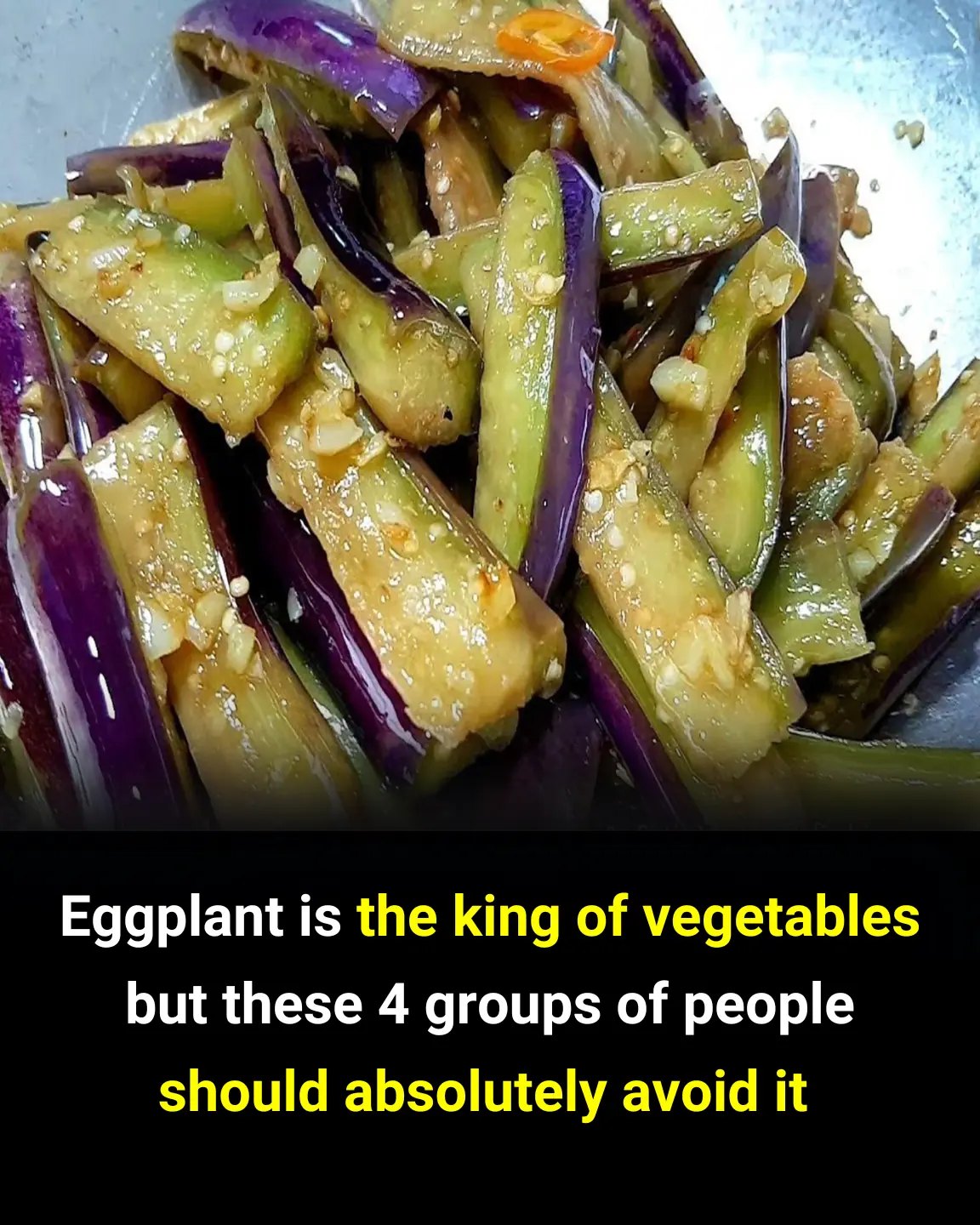
Eggplant, often hailed as the “King of Vegetables,” is a nutritional powerhouse, loaded with fiber, potassium, and antioxidants. Its deep purple skin, which gives it its royal nickname, contains nasunin, a potent phytonutrient that helps protect cell membranes.
However, despite its widespread acclaim and delicious versatility, this popular nightshade vegetable is not suitable for everyone. For specific individuals, eating eggplant can trigger undesirable—and sometimes serious—health reactions.
👑 The Benefits of the ‘King’
Eggplant, or brinjal, offers numerous health advantages that contribute to its celebrated status:
Antioxidant Power: The skin is rich in nasunin, which functions as an antioxidant, helping to eliminate free radicals in the body.
Heart and Brain Support: Eggplant contains phytonutrients that support brain and heart health.
Gut Health: It is a great source of fiber, which promotes healthy digestion and gut function.
🚨 The Warning: 4 Groups Who Must Exercise Caution
The potential risks associated with eggplant stem from several of its natural compounds, primarily oxalates, tyramine, and its membership in the nightshade family. It is essential for these groups to be mindful of their intake:
1. Individuals with Nightshade Sensitivity or Allergies
Eggplant belongs to the nightshade family (Solanaceae), which includes tomatoes and potatoes.
The Problem: For people with a sensitivity or allergy to this group, consuming eggplant can cause unwanted reactions such as skin irritation, headaches, inflammation, or digestive upset. True eggplant allergies, though rare, are possible.
2. People with Kidney Stones or Kidney Issues
Eggplant contains moderate levels of oxalates, natural compounds that can contribute to the formation of stones.
The Problem: For those prone to kidney stones or with existing kidney issues, oxalates can exacerbate the condition by contributing to stone formation. Healthcare professionals may advise these individuals to limit high-oxalate foods.
3. Patients Taking Monoamine Oxidase Inhibitors (MAOIs)
MAOIs are a class of antidepressants.
The Problem: Eggplant contains small amounts of tyramine. Tyramine can interact dangerously with MAOIs, potentially causing a sudden and severe increase in blood pressure known as a hypertensive crisis. Individuals on these medications should strictly limit or avoid eggplant.
4. Individuals with Iron Deficiency Anemia
Eggplant contains the powerful antioxidant nasunin in its skin.
The Problem: Nasunin has been shown to bind to iron and help remove it from cells. While this may be beneficial for individuals with iron overload, it could potentially worsen iron deficiency for those already suffering from anemia.
💡 The Verdict
For the vast majority of people, eggplant is a perfectly healthy and beneficial addition to a balanced diet.
However, anyone who falls into the high-risk categories listed above, or who experiences symptoms like joint pain, digestive distress, or headaches after consumption, should consider limiting their intake and consulting a healthcare professional for personalized dietary advice.
